If you’re in the manufacturing space, you’ve probably heard the buzz around CNC robots lately—but let’s be real, it’s easy to get overwhelmed by all the jargon and "one-size-fits-all" marketing fluff. As someone who’s been supplying CNC robots for over a decade (and talking to shop owners, machinists, and production managers every single week), I get it: picking the right CNC robot isn’t just about checking a box—it’s about matching the machine to your specific job, your budget, and even the layout of your shop floor. No two operations are identical, so generic advice never stuck with me. That’s why I’m breaking down the most common, practical types of CNC robots we work with daily, no fancy tech speak or overpromising, just what actually works for different use cases. CNC Robot
First up, cartesian robots—aka gantry robots, for anyone who’s heard that nickname. These are the old reliables of the group, and if you’ve ever seen a big CNC mill where a robot slides along three straight axes (X, Y, Z, like a grid), that’s exactly this. What makes cartesian robots stand out for a lot of our clients is their precision for large, flat workpieces—think cutting big panels, moving heavy raw materials into a CNC press, or even stacking finished parts on a pallet. The best part? They’re super flexible for shop layouts, too. You can mount them on a floor, hang them from a ceiling, or even bridge two machines. I recently worked with a client who makes custom kitchen cabinets—they used a cartesian robot to move 4×8 plywood sheets between their CNC router and the edge bander, and it cut their material handling time by 60% in the first month. Yeah, that’s the kind of win people don’t talk about enough. The downside? They’re bulkier than other types, so if you’ve got a tiny shop with limited floor space, they might not fit. Also, their speed for small, intricate parts isn’t as fast as some of the smaller options we’ll get to. Our go-to cartesian models are the ones with servo-driven axes—we skip the basic stepper ones because they’re less consistent for repetitive, high-volume jobs.
Next, SCARA robots. That name stands for Selective Compliance Assembly Robot Arm, and honestly, it sounds way more complicated than it actually is. These are the little guys—short arms with two rotary joints at the base, and a third that moves up and down. If you’ve ever watched a machine pick tiny electronic parts off a circuit board, or a 3D printer that grabs small filament spools, that’s a SCARA. Here’s where they shine: they’re lightning-fast for small, precise tasks, and their horizontal arm makes them perfect for vertical work areas. A lot of our clients in the medical device space use SCARAs to load small, delicate components into CNC mills or finish them with a grinder. We had a dental lab client last year that was manually placing tiny titanium screws into custom crowns—swapping to a SCARA cut their defect rate in half because the robot never hesitates or jitters. The catch? They’re built for light payloads—usually under 10 kg, so if you’re moving 50 lb metal blocks, this isn’t your robot. They’re also less flexible for reaching awkward angles, so if your work has lots of complex 3D shapes, a SCARA might not reach all the way without moving the machine.
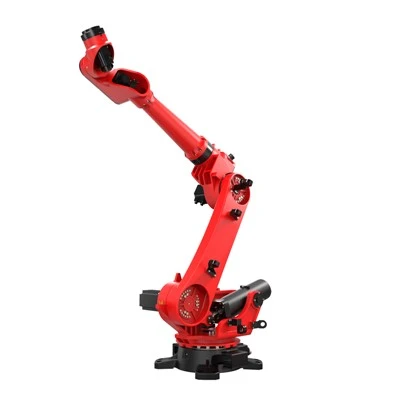
Then there are articulated robots, which are probably the ones you picture when someone says "industrial robot." These have rotary joints, just like a human arm—shoulder, elbow, wrist, sometimes even a smaller wrist joint at the end. The cool thing about articulated robots is their dexterity: they can reach around corners, work in tight spaces, and handle almost any payload, from tiny parts to heavy metal castings. We work with a lot of automotive shops that use articulated robots to load and unload CNC lathes, weld parts, or even deburr complex engine components. Unlike cartesian robots, they don’t need a big grid to move around—they can fit right next to a single CNC machine and reach into the work envelope easily. The biggest difference between articulated robots is how many axes they have: most are 6-axis, which is the sweet spot for general use. A 6-axis arm can bend and twist just like a person’s, so it can reach into deep cavities, rotate a part for finishing, or even apply adhesive evenly over a curved surface. We also have 7-axis articulated robots for specific jobs—like if you’re working on very long parts, such as a truck frame, the extra axis lets the arm move without bumping into the machine. The downside? They’re pricier than cartesian or SCARA robots, and they need careful programming to avoid errors. But once you’ve got the program set, they’ll run 24/7 without a break—we had a fabrication shop that used an articulated robot to deburr steel parts, and it ran 10 hours straight on a Friday night, no issues.
Now, collaborative robots—aka cobots, which have been blowing up the market the last few years, and for good reason. A lot of folks call these the "work for people" robots, and they’re designed to work right alongside your team, not behind a safety cage. Unlike traditional industrial robots (all the ones I mentioned above, actually), cobots have force sensors that stop them if they touch a person or a hard object. That means you don’t need to block off a whole corner of the shop for a safety fence—you can mount a cobot on a table next to a machinist, and it will do the repetitive tasks while the person handles the tricky setup. We’ve seen small machine shops with just a few people use cobots to load their CNC machines overnight—so when they come in the next morning, the parts are already finished. The most popular cobots we supply are 6-axis models, same as articulated robots, but they’re lighter, easier to move, and programable without a team of engineers. A friend who runs a small custom furniture shop swapped his two part-time employees, who were spending all day loading a CNC router, for a cobot, and he saved enough money to hire a third person for design work. The catch? Their payloads are usually under 20 kg, so they’re not for super heavy parts. Also, they’re not as fast as traditional articulated robots for high-volume jobs—they’re better for small to medium batches, or tasks where flexibility is key.
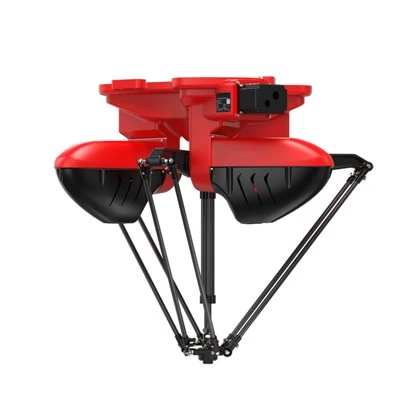
Wait, let’s not forget delta robots, even though they’re a more niche option. These are the spider-like ones with three arms connected to a base, working together to move a lightweight end effector. They’re the fastest of all the types we offer—like, really fast. If you’ve ever seen a snack factory sorting cookies into boxes, or a packaging line that puts tiny bottles into cases, that’s a delta robot. They’re built for ultra-high-speed, light-payload tasks, so they don’t work for general CNC machining (like moving heavy metal parts) but they’re perfect for secondary processes, like picking finished parts off a CNC and packaging them, or small assembly tasks. We sold a few delta robots last year to a electronics assembly client who was manually placing microchips—each delta could pick and place 10 parts per second, which was double the speed of their manual team. The downside? They have a very small work envelope, so they can only reach a limited area, and they’re not nearly as flexible as articulated or cartesian robots. So if your main job is running a CNC mill, a delta isn’t going to help, but if you need to automate the after-processing, it’s a game-changer.
Now, I get it—choosing the right robot means more than just knowing the type. You’ve got to think about your payload (how much weight you’re moving), your work envelope (how big your parts are, or how much space you have), and your batch size. If you’re running 1,000 identical parts a week, a cartesian or articulated robot is probably your best bet for speed. If you’re doing small, custom batches with delicate parts, a cobot or SCARA is going to give you the flexibility you need. A lot of first-time buyers make the mistake of getting a big, fancy articulated robot because it sounds cool, only to realize it’s too big for their shop and overkill for their jobs. That’s why we always take the time to ask about your specific workflow—no pressure, just figuring out what will actually make your job easier.
At the end of the day, CNC robots aren’t just a trend—they’re a way to cut down on repetitive, boring work that makes your team burn out, reduce defects, and get more done without adding extra hours. Whether you’re a tiny machine shop, a large automotive plant, or a medical device lab, there’s a CNC robot that fits your needs. If you’re tired of watching your team spend all day loading and unloading machines, or you’re looking to run overnight shifts without extra labor, let’s chat. We don’t do one-size-fits-all solutions, and we won’t sell you a robot you don’t need. Just reach out to set up a time to go over your shop’s needs, and we’ll walk through the options together.
Palletizing Robot References
- Robotics Industries Association. (2022). Industrial Robot Types: Guide to Selection and Application.
- International Federation of Robotics. (2023). Collaborative Robot Market Trends and Use Cases in Precision Manufacturing.
- Machinist’s Journal. (2021). Gantry vs. Articulated Robots: Which is Right for CNC Material Handling?
- Society of Manufacturing Engineers. (2022). Small-Batch Automation: SCARA and Delta Robots for Job Shops.
Robotic Technology (GD) Co., Ltd.
Robotic Technology (GD) Co., Ltd. is one of the most experienced cnc robot manufacturers and suppliers in China, also supports custom service and one year warranty. Please feel free to wholesale CE approved cnc robot for sale here from our factory. Contact us for quotation.
Address: Room 102, No. 30,Hengfeng 2nd Road,Daguo, Changping Town, Dongguan City,Guangdong,China
E-mail: admin@iroboticplus.com
WebSite: https://www.rb-tic.com/
