Hey folks, if you’ve ever worked with sealing rubber—whether you’re in manufacturing, construction, automotive, or even aerospace—you know this stuff is the unsung hero keeping things dry, airtight, and running smooth. Lately, I’ve been fielding way too many questions from regular folks and new clients alike: “What’s the water absorption rate of sealing rubber anyway?” And honestly, it’s such a make-or-break detail for so many projects, but most resources out there make it sound like rocket science. As a sealing rubber supplier who’s been in this game for 12 years (yeah, I’ve seen every bad seal fail story you can imagine), I’m here to break this down like we’re chatting over a coffee—no jargon, no confusing tables, just real talk. Sealing Rubber
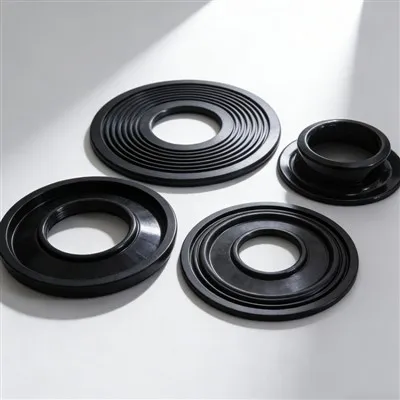
First, let’s get one thing straight: water absorption rate isn’t a “one size fits all” number. It depends entirely on what your sealing rubber is made of. I’ve had people ask me, “Can’t you just tell me a percentage?” and I wish it was that easy, but no—materials like EPDM, silicone, neoprene, and HNBR all behave totally different when they get wet. Let’s start with the most common one we use for 70% of our orders: EPDM rubber. If you’re using EPDM for outdoor gaskets, window seals, or pool equipment, its water absorption is usually super low—like 0.1% to 0.3% after 24 hours of full submersion. Wait, that’s tiny, right? I always tell new clients, “That means for a 100-pound EPDM seal, it’ll soak up 0.1 to 0.3 pounds of water at most—hardly enough to make a difference.” But here’s the catch: that’s only for properly cured EPDM. If it’s under-cured, or has tiny air bubbles from bad molding, that number can jump to 1% or more, and suddenly your seal swells, loses its tension, and fails. I’ve turned away hundreds of bad batches from factories that cut corners on curing—don’t let that be you.
Next up: silicone rubber. This one’s super popular for high-temperature applications, like oven seals or medical equipment, but its water absorption is a little higher than EPDM. Most food-grade or standard silicones clock in at 0.3% to 0.8% in 24 hours. Why the range? Because silicone can have different fillers—some manufacturers add cheap fillers to cut costs, which make it more porous and lets more water in. Last year, a guy from a food processing plant hit me up saying his silicone seals were leaking after a month of washing in a commercial dishwasher. Turns out he went with the cheap silicone from a big box supplier, which had a 1.2% absorption rate. After a few wash cycles, it soaked up so much water it swelled, the seal gap widened, and steam got out. We swapped him for our medical-grade silicone (0.4% absorption) and he hasn’t had a leak since. Lesson here: don’t skimp on material grade for the application.
Then there’s neoprene, the go-to for general-purpose sealing—garage doors, HVAC systems, some marine parts. Its water absorption is a bit higher, usually 0.5% to 1% over 24 hours. Wait, that’s still low, but neoprene is a bit more porous than EPDM if it’s exposed to saltwater or chemicals. If you’re using neoprene in a marine environment, the absorption rate can creep up to 1.5% after a week of submersion, because saltwater actually breaks down the polymer structure a little. That’s why we always recommend HNBR (hydrogenated nitrile rubber) for marine or chemical-exposed parts. HNBR’s absorption rate is even lower than EPDM—like 0.05% to 0.2% in 24 hours. I’ve got a few boat manufacturers as clients, and they swear by HNBR because it doesn’t swell or degrade in saltwater, even after years. It’s a bit pricier, but compared to the cost of replacing a whole boat’s seals every year, it’s a no-brainer.
Now, what do those numbers actually mean for your project? Let’s do a real example. Say you’re sealing a cold storage unit—you need the seal to keep cold air in, so water absorption is critical. If your seal absorbs even 1% water, when that water freezes in cold weather, it expands—cracks the seal, leaves gaps, and suddenly your energy bills skyrocket. I had a client a few years back who used a cheap neoprene seal for their cold room, and within six months, the seals cracked so bad they had to shut down the unit for a week. The total damage? Over $50k in lost inventory and repairs. If they’d used EPDM (0.2% absorption) instead, that never would’ve happened. That’s why the absorption rate isn’t just a random spec—it’s directly tied to the lifespan and performance of your seal.
Wait, but what about long-term absorption? 24-hour numbers are standard in the industry, but I’ve seen people ask, “How much will it soak up after a year?” Good question. For most quality sealing rubbers, the absorption rate slows way down after the first few weeks. EPDM, for example, might hit 0.25% after 24 hours, and only go up to 0.35% after a year of being submerged in mild water. That’s negligible. But if you’re using a lower-grade rubber, that number can keep climbing—sometimes up to 5% after a year, which is enough to make the seal brittle or swell so much it no longer fits. That’s why we test every batch of our rubber for long-term absorption, not just the 24-hour mark. We don’t want to be the reason your project fails in a year.
Now, let’s talk about factors that can throw these numbers off. First, temperature. If your seal is exposed to hot water (like a water heater seal, which hits 120°F or more), absorption rates go up a tiny bit. For EPDM, that 0.2% at room temp can jump to 0.4% at 150°F, because heat softens the polymer and lets water molecules seep in easier. Second, exposure to chemicals. If your seal is going to be near oil, gasoline, or cleaning chemicals, those can break down the rubber’s structure, making it more porous. Neoprene, which is oil-resistant compared to other rubbers, might have a 0.8% absorption rate in oil, vs. 0.5% in plain water. Third, thickness? Wait, no—thickness doesn’t affect absorption rate, but it does affect total water volume. A thick 1-inch seal will hold more total water than a thin 1/8-inch seal, but the percentage is the same. That’s a common misconception I hear all the time—so now you know, it’s the percentage, not the thickness.
A lot of people also ask if sealing rubber ever absorbs so much water it becomes conductive. Honestly, only the lowest-grade, porous rubbers do that. If your rubber has a high absorption rate (over 1%), it can hold enough water to conduct small electrical currents, which is bad for electronics or medical devices. That’s why all our electronic-grade sealing rubbers have an absorption rate under 0.1%—they’re completely non-conductive, even if they get wet. We had a client making smart thermostats a couple years back who tried a cheap rubber, and the seals got wet, shorted out the circuit board, and his product had a 30% return rate. Switched to our grade, and returns dropped to 0. That’s how important this spec is for sensitive apps.
So, how do you pick the right rubber for your needs? Let’s break it down by use case:
- Outdoor seals (windows, doors, gutters): EPDM, 0.1-0.3% absorption. Super low, weather-resistant, cheap.
- Marine/chemical exposure: HNBR, 0.05-0.2% absorption. Expensive, but worth it.
- Ovens, medical equipment: Silicone, 0.3-0.8% absorption. High-temp, food-safe, low absorption.
- General purpose (HVAC, garage doors): Neoprene, 0.5-1% absorption. Budget-friendly, works for non-extreme conditions.
I can’t stress enough how important it is to not just go for the cheapest rubber. A $100 seal that fails in 6 months is way worse than a $200 seal that lasts 5 years. We’ve had clients come to us after wasting money on cheap seals, and they always say the same thing: “I should’ve asked about water absorption first.” That’s why we make it a point to tell every new client to give us the details of their project—what environment the seal is in, how much it’ll be exposed to water, what temps it’ll face—and we’ll tell them exactly which rubber grade to use, and what its absorption rate will be.
Wait, let’s clear up one more myth: some people think that if a seal absorbs water, it’s “bad.” That’s not true at all. A tiny amount of absorption is normal, even for high-quality rubber. The key is that it’s consistent, and doesn’t affect the seal’s performance. If your seal is absorbing more than 1% in 24 hours, that’s when you start to have problems—swelling, cracking, failing to seal. We test every batch of our rubber to make sure it stays below that threshold, so you don’t have to worry.
Last thing: if you’re in the market for sealing rubber, don’t just look at the price tag. Ask the supplier for the water absorption spec for the specific material you’re considering. A lot of unvetted suppliers will give you a generic number, not the one for the actual product you’re buying. That’s where we stand out—we give you the actual absorption rate for your exact application, no fluff, no hidden specs. We’ve been in this business long enough to know that a good seal is the difference between a smooth project and a total disaster.

If you’re not sure which rubber is right for your project, or you want to test our material for your specs, hit us up. We can send you free samples, break down the details for your specific use case, and walk you through any questions you have about absorption rates, material grades, or anything else sealing rubber-related. We’re not here to push a one-size-fits-all product—we’re here to make sure you get the seal that works for you, at a price that makes sense. Don’t wait until your next seal fails to ask these questions—reach out now, and let’s get your project locked in with the right sealing rubber.
Rubber-metal Composite Valve Core References:
- ASTM D570, Standard Test Method for Water Absorption of Plastics and Rubber
- Society of Automotive Engineers (SAE) International, “Elastomer Compatibility and Performance for Automotive Seals”
- International Organization for Standardization (ISO) 62, Rubber, vulcanized or thermoplastic – Determination of water absorption
Tianjin TGE BIAM Graphene Technology Co., Ltd.
Tianjin TGE BIAM Graphene Technology Co., Ltd. is one of the most professional sealing rubber manufacturers and suppliers in China, also supports customized service. Please feel free to buy bulk advanced sealing rubber in stock here from our factory. For quotation, contact us now.
Address: No. 24 Sanjing Road, Dongli Development Zone, Tianjin City, China.
E-mail: sales@tge-tj.com
WebSite: https://www.tge-valve.com/
