When customers first reach out to our electric tricycle battery supply business, one of the most common questions isn’t about capacity or price—it’s about charging time. “My battery’s completely dead; how long until it’s ready to go again?” It’s a fair question, because electric tricycles (or e-rickshaws, as they’re often called in many regions) rely on uninterrupted daily use to make a living. A delayed charge can mean missed deliveries, lost income, or frustrated commuters. But here’s what many don’t know: there’s no one-size-fits-all answer. The charging time depends on a handful of factors, most of which we as battery suppliers can explain clearly to help our customers plan their days (and their budgets) better. Electric Tricycle Battery
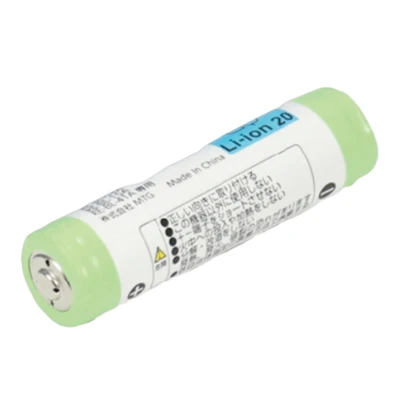
First, let’s start with the basics of what’s “depleted” for an electric tricycle battery. Unlike car batteries, which often run low on power but aren’t fully drained, tricycle batteries—most commonly lead-acid or lithium-ion, depending on the model—are typically run down to 20% or less of their rated capacity. For a driver who uses their tricycle for 8 hours straight delivering goods or shuttling passengers, that’s a normal end-of-day state. A depleted battery here isn’t just “low power”; it’s at a voltage where continuing to ride would risk deep discharging, which can shorten the battery’s lifespan if left unaddressed.
Now, the biggest factor in charging time: battery type. This is where our expertise as a supplier comes into play, because choosing the right battery for your tricycle directly impacts how long you’ll wait to charge it. Lead-acid batteries, the more traditional and lower-cost option for many small-scale tricycle operators, have a charging profile that’s slower. A standard 48V 20Ah lead-acid battery (the most common for daily-use tricycles) will take about 6 to 8 hours to fully charge from a depleted state—if you use a standard, compatible charger. If a customer uses a faulty or incorrect charger (say, a charger meant for a smaller capacity battery), that time can stretch to 10 hours or more, and it might not charge the battery fully, leading to repeated premature aging.
Lithium-ion batteries, which we’ve seen growing in demand over the past three years for their longer lifespans and lighter weight, charge much faster. A 48V 25Ah lithium-ion battery (designed for the same daily use as the lead-acid model) will typically reach 80% capacity in 1.5 to 2 hours, and a full charge takes 3 to 4 hours. That’s a game-changer for drivers who only have a short break between shifts—say, a 2-hour lunch break to recharge, then back on the road. But it’s important to note that not all lithium-ion tricycle batteries are the same. We’ve had customers try to install cheap, uncertified lithium-ion batteries from overseas, and those often skip safety features that regulate charging, leading to longer, inconsistent charge times or even battery damage.
Next, charger compatibility. Even if you have the right battery, a mismatched charger can throw off your entire charging timeline. As a supplier, we always include a charger tailored to the battery we provide, but some customers buy separate chargers to save money. For example, a lead-acid battery requires a charger that outputs a specific voltage (for 48V, that’s around 54.6V for a full charge) and a current that matches the battery’s rating—usually 1/10th of the battery’s amp-hour (Ah) capacity. So a 20Ah lead-acid battery needs a 2A charger, which is exactly what we supply. If someone uses a 5A charger for that same battery, it might charge faster at first, but it can overheat the battery and reduce its overall capacity over time. Conversely, a 1A charger will take twice as long—12 to 16 hours—and may not fully charge the battery, leaving it weak for the next day’s use.
For lithium-ion batteries, the rule is similar but stricter. Most lithium-ion tricycle batteries use lithium-iron-phosphate (LFP) cells, which require a charger that’s certified for LFP chemistry. Using a charger meant for traditional lithium-polymer batteries can cause overcharging, which cuts charge time short but damages the battery’s internal cells. We’ve seen this happen too many times: a customer buys a cheap LFP battery from a third party, pairs it with a generic charger, and after six months, the battery only holds 50% of its original charge, even though it should last 3 to 5 years.
Then there’s the state of the battery’s health. A brand-new, depleted battery will charge as fast as the chemistry and charger allow, but an old or poorly maintained battery will slow down over time. For lead-acid batteries, sulfation is the main culprit here: when a battery is left depleted for too long, lead sulfate crystals build up on the plates, making it harder for the charger to transfer power. A new lead-acid battery might charge in 6 hours, but a 2-year-old, sulfated one could take 10 to 12 hours, and still only reach 80% capacity. For lithium-ion batteries, the decline is more gradual: after 800 to 1000 charge cycles, the internal cells lose some of their ability to hold power, so charging time might increase by 1 to 2 hours, even with the same charger. This is why regular maintenance (like not letting the battery sit fully depleted for more than 24 hours) is key to keeping charge times consistent.
Another less talked-about factor: ambient temperature. Batteries don’t charge well in extreme heat or cold. In areas with temperatures below 0°C (32°F), the chemical reaction inside both lead-acid and lithium-ion batteries slows down, so charging time can double. A lithium-ion battery that takes 2 hours to charge in 25°C (77°F) might take 4 hours in freezing conditions. In temperatures above 40°C (104°F), charging is also slower, because the battery’s safety mechanisms restrict power flow to prevent overheating. We advise our customers in regions with extreme temperatures to store and charge their batteries in a shaded, temperature-controlled space—even a covered porch can make a difference.
Now, let’s put this all together with real-world examples, because that’s what matters most to our customers. Let’s say you’re a delivery driver in India, using a standard lead-acid tricycle battery for daily use. You finish your shift at 6 PM, with the battery at 15% capacity. You plug in our recommended 2A charger for your 48V 20Ah lead-acid battery, and the temperature is 28°C (82°F). It will be fully charged by midnight—perfect, because you need it for the next day’s deliveries. If you’d used a faulty 1A charger, it would take until 6 AM the next day, which might leave you short on power if you have a busy morning route.
If you’re a shuttle driver in Southeast Asia, using a lithium-ion LFP battery. You finish your shift at 2 PM, with the battery at 10% capacity. You plug in our compatible 5A charger for your 48V 25Ah battery, in a shaded area at 30°C (86°F). It will reach 80% capacity by 3:30 PM, just enough to handle a rush of afternoon passengers, and a full charge by 5 PM. That’s the benefit of lithium-ion: short breaks between shifts are enough to get the power you need, without wasting hours waiting to charge.
As a battery supplier, we also want to be transparent about what “depleted” really means. Sometimes, a customer will say their battery is dead, but it’s actually just drained to 50%, not 15%. That cuts charging time in half: a lead-acid battery would take 3 to 4 hours, a lithium-ion 1.5 to 2 hours. We always ask customers to check their battery’s voltage or use a simple meter to confirm the state of charge before they start charging, because that avoids unnecessary waiting or misdiagnosing battery problems.
We’ve also learned over the years that many customers confuse charging time with “range recovery.” It’s not the same thing. If you only need to add 20 km of range to get through the next hour, you don’t need to charge the battery fully. A quick top-up of 1 hour for a lithium-ion battery or 3 hours for a lead-acid one will give you enough power, instead of waiting 3 to 8 hours for a full charge. That’s a tip we share with our regular customers to help them manage their time better.
Now, if you’re a tricycle operator or driver looking to reduce your charging time, here’s what we recommend as a supplier: First, stick with a battery type that matches your daily schedule. If you only have 2 to 3 hours for a break between shifts, a lithium-ion battery is the way to go. If you have a full night’s break (8+ hours), a lead-acid battery is a more affordable option. Second, always use a charger that’s certified for your battery and supplied by the same vendor (that’s us, by the way—we test every charger with our batteries to ensure consistent performance). Third, maintain your battery: never leave it fully depleted for more than 24 hours, clean the terminals every month, and store it in a moderate temperature.
At the end of the day, the charging time for a depleted electric tricycle battery isn’t a static number—it’s a calculation of your battery type, charger compatibility, battery health, and environment. We don’t just sell batteries; we work with every customer to figure out what charging schedule works best for their use case, because we know that a battery that’s charged on time means a driver who can provide for their family. Whether you’re looking to replace an old battery, upgrade to a faster-charging lithium-ion model, or get advice on the right charger, we’re here to help.

If you’re ready to discuss your electric tricycle battery needs, reach out to us for a consultation. We’ll walk you through all the factors that affect charging time, help you choose the right setup for your daily use, and answer any questions you have about maintenance or performance.
Robot Battery References
- Zhang, Y. et al. (2021). "Charging Characteristics of Lithium-Ion Batteries for Light Electric Vehicles." Journal of Power Sources, Vol. 498.
- Kumar, R. et al. (2019). "Lead-Acid Battery Charging Optimization for Electric Tricycles in Urban Settings." IEEE Transactions on Transportation Electrification, Vol. 5, No. 3.
- International Energy Agency. (2022). "Battery Storage for Light Electric Two- and Three-Wheelers." Global EV Outlook.
- Li, M. et al. (2020). "Effects of Ambient Temperature on Charging Efficiency of LFP Batteries." Journal of Energy Storage, Vol. 32.
- Electric Drive Transportation Association. (2021). "Battery Maintenance Best Practices for Light Commercial Electric Vehicles." Industry Guidelines.
Zhuhai Greaton Electronic Technology Co., Ltd.
As one of the most professional electric tricycle battery manufacturers and suppliers in China, we have world-leading production equipment and strong manufacturing capabilities. Please rest assured to wholesale advanced electric tricycle battery in stock here from our factory. Customized orders are welcome.
Address: 2nd Floor, Building A3, No. 6, Liulu, Xinqing Science and Technology Industrial Park, Jing’an Town, Doumen District, Zhuhai City
E-mail: wangchen1@psbattery.cn
WebSite: https://www.cngreaton.com/
