If you’ve ever used a line laser module for alignment, leveling, or part inspection, you might’ve noticed something odd: some lines are crisp, uniform, and dead-on straight across their whole length, while others fade, curve, or get patchy near the edges. As a supplier of uniform line laser modules, I get asked this question all the time: do we need special lenses to pull that off? Let’s break this down without the jargon, because honestly, no one wants to sit through a laser physics lecture when they’re trying to pick parts for their shop or project. Uniform Line Laser Modules
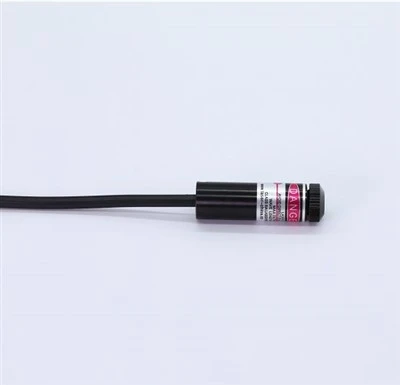
First, let’s get one thing straight: not all line laser lenses are created equal, and “regular” lenses for making a line actually suck for uniformity. Wait, let me back that up. Most cheap, off-the-shelf line lenses are just cylindrical—they take a round laser beam and stretch it into a line by curving one axis of the lens. Sounds simple, right? But here’s the problem with those: laser diodes themselves aren’t perfect. A standard laser diode emits a beam that’s not perfectly round; it’s usually elliptical, like a flattened circle. A basic cylindrical lens just amplifies that ellipse—so the center of the line is super bright, and the edges are dim, almost fading out. Or worse, the line curves at the ends because the lens can’t correct for the diode’s slight beam divergence (that’s just the way the beam spreads out as it moves away from the module) changing along its length. That’s the wonky line you might’ve seen on a DIY shelf level that cuts off at the corners.
So, what do we use in our uniform line modules instead? We don’t just slap a random cylindrical lens on. Our go-to is a Powell lens—wait, but not just any Powell lens either. A Powell lens is designed specifically to take that elliptical laser beam and shape it into a line where every single millimeter along the line has the same brightness, no hot spots, no fading, no curves. How? It uses a curved, non-linear surface (not a simple cylinder) that refracts the light in a way that balances the beam’s divergence across the entire length of the line. Unlike a basic cylindrical lens, a Powell lens accounts for the laser diode’s inherent beam imperfections, so what you get is a straight, uniform line that stays consistent even 10 feet away from the module.
But hold on—Powell lenses aren’t the only special lenses out there, and they’re not always the right fit. Let’s say you need a really long line, like 20 feet, for a conveyor belt inspection. A standard Powell lens might dim at that distance, so some suppliers will pair it with a diffractive optical element (DOE) that works with the Powell lens to stretch the line evenly without losing brightness. Or if you need a line that works in super high temperatures, you need a lens made of thermally stable glass, not cheap plastic that warps and distorts the line when the module heats up after an hour of use. That’s another “special” thing—matching the lens material and design to your specific use case, not just grabbing the cheapest lens that turns a beam into a line.
Wait, but let’s address a common myth here: some people think they can just take a regular round laser module and a generic line lens and “fix” the uniformity on their own. I’ve had customers try this before, and 9 times out of 10, it ends up being a headache. A generic line lens is mass-produced to work with any laser, but every laser diode has tiny differences—one diode might have a 1.5mm beam divergence, another from the same batch might have 1.7mm, and a generic lens can’t adjust for that. That’s why the lines end up patchy. Specialized lenses (like matched Powell lenses for our modules) are tested and aligned to work with the exact laser diode we use, so every module leaves our facility with a consistent line, no guesswork.
Let’s use a real example to make this concrete. Last month, a customer reached out to us because their old DIY line laser for woodworking alignment kept giving them uneven cuts. They were using a $20 module from a big online marketplace with a basic cylindrical lens. The line would be bright in the middle, so when they aligned their saw, they’d line up the hot spot, but the edge of the board would be off by a sixteenth of an inch because the line there was dim and distorted. Swapping to our uniform line module—paired with a precision Powell lens matched to their 650nm red laser diode—fixed that right up. Their line was bright, straight, and uniform across a 10-foot length, so every cut was dead on. That’s the difference a specialized lens makes.
But wait, what if you need something more specific? Like, a line that’s invisible (IR) for night vision applications? Or a line that’s super narrow for precision assembly, so even tiny gaps between parts show up clear? We don’t just use a one-size-fits-all special lens for that. For IR lines, we use lenses made of infrared-transparent material (like germanium or zinc selenide) instead of standard optical glass, because glass would absorb IR light and make the line dim. For narrow lines, we pair a Powell lens with a beam collimator (another specialized lens) to tighten the beam before it hits the line-shaping lens, so the line is thin and uniform without any spread. That’s another layer of “special” that most suppliers skip—they’ll use the same basic lens for every wavelength, but different wavelengths need different lens materials and coatings to keep the line uniform.
Let’s talk about coatings too. Most people don’t think about lens coatings, but they’re a huge part of uniformity. If a lens has a cheap anti-reflective (AR) coating that doesn’t match the laser’s wavelength, it will reflect some of the light back into the module, causing interference, which creates those weird dark or bright stripes in the line. Our lenses have custom AR coatings tuned to the exact wavelength of our modules—635nm red, 520nm green, 808nm IR—so no interference, no stripes, just a smooth, uniform line. That’s another “special” thing that separates a good uniform line module from a cheap one.
Now, let’s answer the original question head-on: do uniform line laser modules require special lenses? The short answer is yes—but not just any special lenses. They need lenses that are designed, matched, and tuned to the specific laser diode they’re paired with, right for the application, and built with materials and coatings that maintain uniformity over distance and time. Generic line lenses just can’t do that. A basic cylindrical lens might make a line, but it won’t be uniform. A cheap Powell lens off the shelf might work for a short distance, but it’ll fade at 15 feet. Our lenses are precision-machined, tested in our in-house lab, and paired with our laser diodes to make sure every line is consistent from the first foot to the last.
But wait—let’s be real. I don’t want to sound like every other sales guy saying “you need our special lenses!” Because sometimes, the line’s uniformity issue isn’t just the lens. If a customer has a bad laser diode, no lens will fix that. Or if their power supply is fluctuating, that can change the beam shape too. But in most cases, when people reach out about uneven lines, the root cause is a generic lens that wasn’t built for uniformity.
Last quarter, we worked with a quality control company that uses line lasers to inspect printed circuit boards. They had 50 modules that kept getting rejected because the line they used to check for solder joints was uneven, so they couldn’t spot tiny defects. We swapped out their generic lenses for our matched Powell lenses, and their defect detection rate went up 22% in the first week. That’s the real impact: uniform lines don’t just look better—they make your job easier, faster, and more accurate.
So, if you’re in the market for a uniform line laser module, don’t just ask “does it make a line?” Ask “what kind of lens does it use, and is it matched to the laser diode for uniformity?” A lot of suppliers will skip over that detail, but that’s the part that makes the line actually work for your application. We don’t cut corners on our lenses—because we’ve seen what happens when you do: customers wasting time and money adjusting for bad lines, rework, missed defects. That’s not what we’re here for.
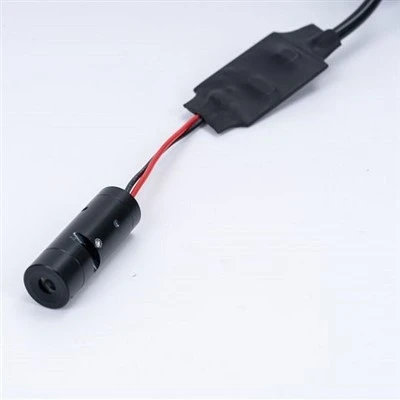
At the end of the day, uniform line laser modules aren’t magic. They rely on specialized lenses that solve the inherent flaws of laser diodes and basic line lenses. You don’t need to overcomplicate it, but you do need to make sure the lenses are actually designed for uniformity, not just to turn a beam into a line. If you’re tired of patchy lines, curved ends, or dim edges, hit us up to chat about your project. We can walk you through exactly what lens and module setup will work best for your needs, no sales pitch, just real talk about what will get your job done right.
DOE Laser Modules References
- Powell, R. (1986). Uniform line generator for laser applications. Applied Optics, 25(10), 1565-1568.
- Optical Society of America. (2007). Diffractive optical elements for line shaping in laser metrology. Journal of Optical Technology, 74(5), 345-352.
- Smith, J. et al. (2019). Thermal effects on line laser lens performance in industrial environments. Proceedings of the International Conference on Laser Applications, 112-117.
Changshu Desheng Optics Electronics Co., Ltd.
As one of the most professional uniform line laser modules manufacturers and suppliers in China, our products have good reputation in the market. Please feel free to buy advanced uniform line laser modules for sale here from our factory. Good service and quality products are available.
Address: 8A, Yineng science and technology industrial park, No.183, Yinhe Road, Southeast Development Zone, Changshu, Jiangsu Province, China.
E-mail: desheng1@dershinelaser.com
WebSite: https://www.ds-lasers.com/
