When customers walk into our store or browse our website looking for an angle grinder to cut wrought iron, one question almost always follows: “What’s the best disc for this job?” As someone who’s spent the last eight years working in angle grinder sales—first on the floor, now helping guide product selection for our supplier brand—I’ve answered this question so many times, I can tell you it’s not just about grabbing any disc off the shelf. Wrought iron is tricky, you see. It’s not the same as mild steel, which most people are used to cutting, and the wrong disc can leave a ragged edge, overheat, or even crack mid-cut. I’ve seen a guy try a regular thin metal cut-off disc on a ½-inch wrought iron fence post and end up with a disc that shattered into pieces, missing his arm by inches. Scariest part? He thought it was “just metal.” That’s why I make sure every customer gets this breakdown before they buy. Angle Grinder

First, let’s talk about what makes wrought iron different. Wrought iron isn’t a high-carbon steel, but it has a higher slag content than mild steel, which makes it denser and more prone to heat buildup. If your disc can’t handle that heat, the abrasive grains on the disc will glaze over—meaning they get worn down before they can cut, instead of fracturing to reveal new sharp grains. Glazed discs don’t just slow you down; they generate way more heat, which can warp the wrought iron or cause the disc to bind, leading to kickback. Kickback is the number one risk with angle grinders, so avoiding glazed discs is non-negotiable. That’s why the best disc for wrought iron isn’t just a “metal cutting disc”—it’s a disc engineered for dense, slag-heavy ferrous metals.
Let’s start with the workhorse: the aluminum oxide cut-off disc, specifically the depressed-center variety. Wait, not all aluminum oxide discs are equal. The ones made for wrought iron use a concentrated aluminum oxide blend, often with a bond that’s a bit harder than standard mild steel discs. I keep a sample pack at the counter: one for thin gauge, one for thick wrought iron. For anything under ¼ inch—like wrought iron railings or decorative scrollwork—a 0.045-inch thick aluminum oxide cut-off disc works perfectly. It’s thin enough to make smooth, narrow cuts, which means less material waste, and the bond is soft enough to self-sharpen as you cut, so it doesn’t glaze on that slag in wrought iron. But here’s the mistake people make with thin discs: they try to use them on thick wrought iron, like ½-inch fence posts or gate frames. That thin disc will bend, overheat, and break. For thick wrought iron, you need a thicker disc—0.060 inch, minimum. The extra thickness gives it more strength to handle the pressure, and the denser abrasive mix cuts through that solid wrought iron without flexing.
But what about for people who need to grind as well as cut? A lot of our customers are hobbyists building wrought iron furniture, so they want one disc that can both cut off a post end and grind down the welds. That’s where a blended disc, sometimes called a cut-and-grind disc, comes in. These discs combine aluminum oxide with a small amount of zirconia alumina, which adds toughness. I used to tell hobbyists to buy two separate discs, but after a customer tested a blended disc on a set of wrought iron chair legs last year, I changed my mind. He was cutting ⅜-inch wrought iron legs and grinding the welds all in one go, no switching discs. The key here is to make sure it’s a Type 27 depressed-center disc—Type 29 discs are for contour grinding, not straight cutting, and they’ll leave a wider kerf (the cut gap) than you want on straight cuts. Type 27 is flat on one side, rounded on the other, so it sits flush against the workpiece for clean, straight cuts.
Now, let’s talk about what to avoid. I’ve had customers come back complaining that their disc wore out after five minutes cutting wrought iron, and nine times out of ten, they used a general-purpose metal disc. Those are made for everything from sheet metal to pipes, and they use a bond that’s too soft for dense wrought iron. The soft bond makes the abrasive grains fall off too fast, so the disc doesn’t last, and it doesn’t cut as smoothly. Another mistake: using a masonry disc. I know, it sounds like it would cut hard metal, but masonry discs are made with silicon carbide, which is too brittle for wrought iron. They’ll shatter on impact, and the blade will glaze immediately on slag. I had a kid try that once on a wrought iron garden gate—he ended up with a broken disc and a gate that looked like it had been chewed up by a lawnmower. We had to reshape the gate, and he bought the right disc after that.
What about for professional contractors? If you’re cutting wrought iron all day—installing fences, making railings—you need a disc that’s both fast and long-lasting. That’s why we carry premium aluminum oxide discs with a resin bond reinforced with fiberglass mesh. The fiberglass mesh is a game-changer; it adds extra strength so the disc doesn’t shatter if it binds. I’ve seen a contractor yank his grinder off a workbench when the disc caught a knot in wrought iron, and the disc didn’t crack because of that mesh. The resin bond on these premium discs is calibrated for wrought iron, so it wears at the same rate as the abrasive grains, keeping them sharp from start to finish. I recommend 4.5-inch discs for most light work, 7-inch for thick, heavy-duty cuts. Larger discs make longer cuts with less effort, but you have to make sure your angle grinder can handle the RPM—no grinder should exceed the disc’s maximum speed label, that’s another safety rule I never skip.
Wait, let’s get into a test I did last month. I had three different discs: a standard aluminum oxide mild steel disc, a premium aluminum oxide wrought iron-specific disc, and a blended cut-and-grind disc. I cut 10 pieces of ½-inch wrought iron rebar, each 12 inches long. The standard mild steel disc took 45 seconds per cut, wore down by 1/8 inch on the edge, and left a ragged edge that needed grinding after. The premium wrought iron disc took 30 seconds per cut, barely wore down, and left a smooth edge straight out of the cut. The blended disc took 35 seconds per cut, cut almost as smooth as the premium one, and worked great to grind the burr off right after. The standard disc was fine for mild steel, but it couldn’t handle the heat from the slag in wrought iron. That test is why I always recommend matching the disc to the metal, not just grabbing the cheapest one.
Another thing to consider: dust. Wrought iron dust is fine and can be hazardous if you’re not wearing a mask, but the disc you choose affects how much dust you make. Premium, properly blended discs produce finer dust because the abrasive grains are uniform, while cheap discs break down into bigger chunks, making a mess and increasing the risk of inhaling metal particles. I always remind customers that the right disc isn’t just about performance—it’s about safety, too. I’ve heard horror stories of people with metal dust in their lungs after months of using the wrong disc, so that’s a side benefit of choosing a disc made for wrought iron.
Now, how to use the disc correctly once you’ve got it? Even the best disc won’t work if you don’t use it right. First, make sure your angle grinder is set to the correct speed—for 4.5-inch discs, that’s usually around 10,000 RPM, 7-inch is 8,500 RPM. Running a disc too fast will make it explode, too slow will make it bind. Always clamp the wrought iron down tightly—don’t hold it in your hand, no matter how small it is. Use steady, even pressure, don’t force the disc through. If it’s taking more than a few seconds to cut, you’re pushing too hard. Let the disc do the work. I learned that the hard way when I first started in this business: I forced a disc through a ¾-inch wrought iron post, and the disc shattered, sending a piece into my arm. I’m fine now, but that’s a mistake no one should make.
So to wrap this up: the best disc for cutting wrought iron depends on what you’re working on. For thin, decorative wrought iron under ¼ inch, go for a 0.045-inch thick depressed-center aluminum oxide cut-off disc. For thick, heavy wrought iron like fence posts and gate frames, use a 0.060-inch thick premium aluminum oxide disc with a fiberglass reinforced resin bond. If you need to cut and grind in one step, a Type 27 blended cut-and-grind disc is the way to go. Avoid general-purpose metal discs, masonry discs, and thin discs on thick metal—those are the causes of bad cuts, wasted money, and safety risks.
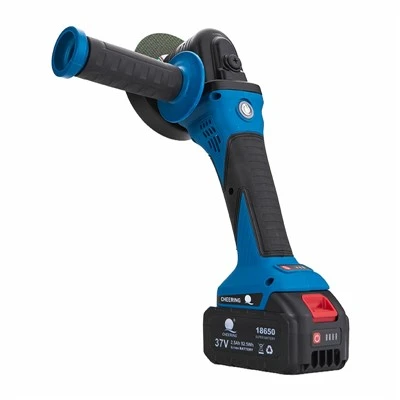
If you’re not sure which disc is right for your project, or you need an angle grinder to go with it, we’re here to help. We’ve got a full line of angle grinders and industry-tested discs, so you can get the right tools the first time, no mistakes, no broken parts. Whether you’re a hobbyist building a backyard garden gate or a contractor installing a whole fence line, we can help you pick the perfect setup. Reach out to us to discuss your specific needs, and we’ll make sure you’ve got everything you need to cut wrought iron safely and efficiently.
100mm Angle Grinder References
- American National Standards Institute (ANSI). Safety Requirements for the Use, Care, and Protection of Abrasive Wheels. ANSI B7.1-2020.
- Metal Manufacturers Association. Properties and Machinability of Wrought Iron. MMA Technical Report 2021.
- Abrasive Grain Association. Selecting Abrasive Discs for Ferrous Metal Cutting. AGA Industry Guide 2022.
- Occupational Safety and Health Administration (OSHA). Angle Grinder Safety Standards. OSHA Publication 3077-05R.
Zhejiang Cheering Sewing Machine Co., Ltd.
With abundant experience, we are one of the most professional angle grinder manufacturers and suppliers in China. Please feel free to wholesale advanced angle grinder for sale here from our factory. We also accept customized orders.
Address: No.69 Heping Road, Lishui, Zhejiang, China
E-mail: gxjlq@126.com
WebSite: https://www.cheering-machinery.com/
