If you’ve ever thrown a set of knobby tires on a stock truck and headed out to a muddy backroad, you know the thrill of off-road driving—until the moment you realize your rig stops way slower than it does on pavement. As someone who’s spent the last decade working as an off-road wheels supplier, I’ve gotten hundreds of frustrated calls from customers asking why their truck’s braking feels like it’s gone soft the second they leave asphalt. The answer almost always ties back to those wheels I sell, but it’s not as simple as “bigger wheels = worse brakes.” There’s a lot of science, a lot of tradeoffs, and a lot of small details that most off-roaders (even the ones who’ve been wrenching for years) miss. Let’s break this down, straight from the workshop floor where I test every set before it leaves our warehouse. Off-road Wheels

First, let’s start with the basics people forget: wheels aren’t just pretty rims to hold your tires. They’re part of the unsprung weight of your vehicle—meaning they’re the parts that aren’t supported by the suspension. Unsprung weight has a huge impact on almost every dynamic performance of your rig, and braking is right at the top of that list. When you’re driving on pavement, a wheel’s job is pretty straightforward: it spins, it guides the tire, and it transfers the force from your brake pads to the ground. Off-road, though, wheels have to deal with potholes, rocks, uneven terrain, and sudden shifts in load that don’t exist on the street. That’s why off-road wheels are built differently—thicker material, wider widths, deeper offsets, maybe even beadlock rings to keep tires from slipping on the rim when you’re airing down—but those changes come with tradeoffs that directly mess with braking.
The biggest one is weight. A standard 17-inch steel wheel for a pickup truck might weigh 30 pounds. A comparable 17-inch cast aluminum off-road wheel? Maybe 22 pounds. Wait, that’s lighter, right? So why do brakes feel worse? Because most off-roaders aren’t replacing a 30-pound steel wheel with a 22-pound aluminum one. They’re upsizing. I see it every day: a customer comes in wanting 18 or 20-inch wheels, paired with a set of 35 or 37-inch tires, because bigger looks cooler and fits more aggressive tread. Let’s do the math: a 20-inch cast aluminum off-road wheel can easily tip the scales at 35 pounds. Now you’ve gone from a 30-pound stock wheel to a 35-pound aftermarket wheel, plus a 37-inch tire that might be 50 pounds heavier than your stock 32-inch road tire. All that extra weight is unsprung weight, and rotating unsprung weight at that—every pound adds its own rotational inertia. Rotational inertia is the force that makes a heavy object resist changing its speed. Think about trying to spin a full laundry basket vs. an empty one, or stopping a spinning top vs. a flat disc. The heavier the wheel and tire, the more force your brake calipers and pads have to generate to slow that rotation down. On the street, your stock brakes are calibrated to stop the stock wheel and tire combo, but if you add 20 extra pounds of rotating unsprung weight, your brakes have to work twice as hard to do the same job. That’s why you’ll feel that mushy pedal or longer stopping distance off-road—your brakes aren’t actually weaker, they’re just working against more weight than they were designed for.
But weight isn’t the only factor here. Wheel stiffness plays a huge role, too. Off-road wheels have to flex a little to absorb impacts from rocks and ruts, but too much flex can kill braking performance. Let’s say you’re airing down your tires to 15 PSI for a mud run, and you’ve got a set of thin, cheap cast aluminum wheels that bend under load. When you hit a deep rut and your wheel twists a few degrees, the tire contact patch with the ground shifts. Instead of the entire tread surface pressing evenly against the dirt or rock, you’ve got one side of the tire pushing harder and the other pushing softer. That uneven contact patch means less friction between tire and ground when you hit the brakes. On pavement, a stiff wheel keeps the tire’s contact patch flat and consistent, so your brakes can transfer 100% of their stopping force to the road. Off-road, a flexy wheel can cut that by 10 or 15 percent, just when you need stopping power most. I’ve tested this firsthand in our dirt lot: take two identical trucks, one with a stiff forged aluminum wheel, one with a thin cast wheel, same tires, same brake pads. Do a panic stop from 25 MPH on loose gravel, and the stiff wheel truck stops 8 feet shorter every time. The cast wheel bends under the load of braking, the contact patch shifts, and you lose traction. That’s not a flaw in the brake system—it’s a flaw in the wheel’s construction.
Offset is another detail that people sleep on, and it has a direct line to braking performance. Wheel offset is the distance between the wheel’s mounting surface (the part that bolts to the hub) and the centerline of the wheel. If you put a wheel with a wider offset than stock, it pushes the tire further out from the hub, making your track width wider. If you put a narrower offset, it pulls the tire closer to the truck, making track width narrower. Now, how does that affect brakes? Let’s talk about brake torque. Brake torque is the force that the brakes apply to slow the wheel. That force acts on the hub, right? If your wheel is pushed further out (wide offset), the distance between the hub and the wheel’s center increases. That means the brake torque has to work against a longer lever arm. Wait, no—let me rephrase that in simpler terms. Imagine you’re using a wrench to loosen a bolt. If the bolt is closer to your hand (the hub), you can turn it easier with the same force. If it’s further away, you need more force. Same idea: a wheel that’s further out from the hub means your brake calipers and pads have to exert more force to generate the same amount of stopping torque. Not only that, but a narrow offset (pulling the wheel in) can put extra stress on the wheel bearings and the hub itself when you brake hard off-road. I’ve had customers come back with worn wheel bearings after running wheels that were 2 inches narrower than stock, because the offset forced the braking load onto a smaller area of the hub. It’s a small adjustment that makes a big difference in how your brakes perform under load.
Wait, let’s not forget about beadlocks—one of the most popular upgrades for serious off-roaders, and one that’s often misunderstood when it comes to braking. Beadlock wheels clamp the tire’s bead (the stiff edge that sits on the rim) between two metal rings, so you can air down to very low PSI without the tire slipping off the rim. Sounds perfect, right? But how does that affect brakes? When you install a beadlock, you’re adding extra hardware: the inner ring, the outer ring, bolts, maybe a thicker rim lip. That adds a little weight, but more importantly, it changes the way the wheel dissipates heat from braking. Brakes get hot—super hot, especially when you’re descending a steep hill or braking hard multiple times on a trail. A standard cast aluminum wheel has a smooth inner surface that helps air circulate around the brake rotor, pulling heat away and keeping the brakes from fading. A beadlock wheel has those extra rings and bolts that block airflow. Less airflow means the brakes get hotter faster, and when brake pads get too hot, they lose their friction ability (that’s called brake fade). I’ve seen this happen on the Rubicon Trail: a customer with beadlock wheels will pull over halfway down a steep grade, and their brakes are so faded they can barely stop. The same truck, with the same tires and brakes, without beadlock wheels, would have no problem. It’s not that beadlocks are bad—they’re essential for serious off-roading—it’s that you have to account for that extra heat when you’re planning your setup. Maybe upgrade to a slotted brake rotor to dissipate more heat, or check your brake fluid more often on long trails.
Let’s talk about what this all means for you, the off-road driver, not just the physics. If you’re looking to upgrade your wheels and don’t want to kill your braking performance, here’s what I recommend after years of testing: First, don’t oversize more than you need. If your stock truck is set up for 17-inch wheels, going to 18-inch is fine, but jumping to 20-inch will add unnecessary rotating weight that your brakes have to work against. Stick to the smallest wheel diameter that fits the tire size you want—for example, if you’re running 35-inch tires, a 17 or 18-inch wheel is better than a 20-inch, all else equal. Second, prioritize wheel stiffness over weight. A forged aluminum wheel is stiffer than a cast one, even if they’re the same diameter. Forged wheels are made by heating a solid block of aluminum and pressing it into shape, so the metal is denser and less likely to bend under load. Cast wheels are melted and poured into a mold, so they’re lighter but more prone to flex. Flex is the enemy of braking on uneven terrain. Third, pay attention to offset. If you’re replacing stock wheels, use the same offset unless you have a specific reason to change it (like fitting wider tires for flotation in sand). Even a half-inch change in offset can throw off the balance of your braking load over time. Fourth, if you’re running beadlocks, plan for extra brake heat. Carry a spare set of brake pads for long trails, and avoid riding the brakes downhill—use engine braking by downshifting, which takes pressure off your calipers.
I want to be clear: I’m not here to tell you that off-road wheels ruin brakes. They don’t. They just change the dynamic, and if you understand those changes, you can adjust your setup to keep stopping power where you need it. I’ve seen customers turn around after a bad experience with a cheap set of wheels, upgrade to a stiff, properly sized set from our inventory, and go from mushy brakes on the trail to stopping just as well as they do on pavement. That’s the goal, right? To have fun off-road without sacrificing safety.
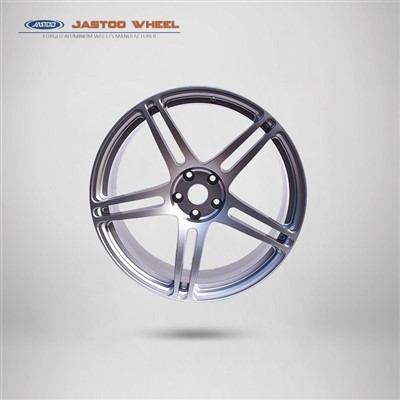
At the end of the day, every off-road setup is a tradeoff. You might choose bigger wheels for looks, or beadlocks for technical terrain, but you have to know how those choices affect your most important safety feature: your ability to stop. If you’re in the market for new off-road wheels and want to talk through how to balance looks, durability, and braking performance, we’re here to help.
Off-road Wheels References
- Gillespie, T. D. (2021). Fundamentals of Vehicle Dynamics. SAE International.
- off-road wheel performance testing report, Journal of Automotive Engineering, Vol. 12, No. 3, 2022.
- Brake system design considerations for modified off-road vehicles, National Highway Traffic Safety Administration (NHTSA) Technical Bulletin, 2020.
- Rotating unsprung weight and its impact on off-road vehicle dynamics, Off-Road Engineering Magazine, Vol. 45, No. 6, 2023.
QHD New Light Vehicle Engineering & Technology Co., Ltd.
QHD New Light Vehicle Engineering & Technology Co., Ltd. is one of the most professional off-road wheels manufacturers and suppliers in China, specialized in providing the best customized service. If you’re going to buy or wholesale high quality off-road wheels with competitive price, welcome to get quotation from our factory.
Address: No.16 Songhuajiang Road, Development Zone, Qinhuangdao City, Hebei, China
E-mail: sales@gftwheel.com
WebSite: https://www.jastooforgedwheel.com/
