Hey there, jewelry enthusiasts and industry pros! I’m stoked to be here as a supplier of Jewelry 3D Scanners to chat about one of the most burning questions in the biz: What is the precision of a Jewelry 3D Scanner in capturing jewelry features? Jewelry 3D Scanner
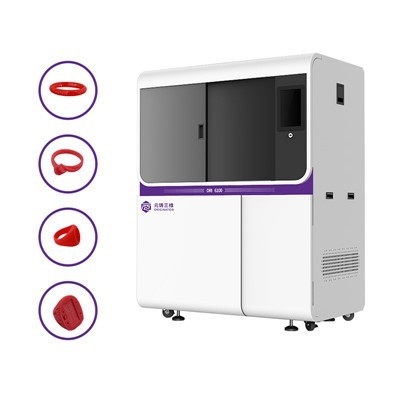
Let’s start with the basics. Precision, in the context of a Jewelry 3D Scanner, is all about how accurately it can capture the details of a piece of jewelry. You know, those tiny little nuances that make each piece unique – the intricate carvings, the smooth curves of a gemstone, or the fine details of a setting. It’s like taking a super – detailed photo, but in 3D.
Now, why is precision so important in jewelry scanning? Well, think about it. Jewelry is often a high – value item, and every detail matters. Whether you’re a designer looking to recreate a one – of – a – kind piece, a manufacturer trying to mass – produce a design, or a jeweler wanting to catalog your inventory, you need the scanner to pick up even the tiniest features. If a scanner can’t capture those details, you might end up with a 3D model that doesn’t do the real jewelry justice.
So, what factors affect the precision of a Jewelry 3D Scanner? First up, the technology behind the scanner. There are different types of 3D scanning technologies out there, like structured light scanning and laser scanning. Structured light scanners project a pattern of light onto the jewelry and then analyze how the pattern is distorted to create a 3D model. Laser scanners, on the other hand, use a laser beam to measure the distance between the scanner and the jewelry surface.
In general, laser scanners tend to offer higher precision when it comes to capturing fine details. They can measure small changes in the surface of the jewelry with incredible accuracy. However, they can also be more expensive and a bit more finicky to set up. Structured light scanners are usually more affordable and easier to use, but they might not be as precise when it comes to really fine details.
Another factor that affects precision is the resolution of the scanner. Resolution is basically how many points the scanner can measure per unit of distance. A scanner with a high resolution can capture more details because it can measure smaller areas of the jewelry. For example, if you have a scanner with a resolution of 0.1 mm, it can detect changes in the jewelry surface that are as small as 0.1 mm apart. This is really important for capturing things like the fine details of a diamond pavé setting.
The quality of the scanner’s sensors also plays a big role. Sensors are what detect the light or laser reflections from the jewelry and turn them into data. High – quality sensors can pick up more subtle changes in the light, which means they can capture more details. Cheaper sensors might miss out on some of those finer nuances, resulting in a less precise 3D model.
Now, let’s talk about the environment where the scanning is done. Believe it or not, the lighting and the stability of the scanning area can have a huge impact on precision. If the lighting is too bright or too dim, it can cause the scanner to misinterpret the reflections from the jewelry, leading to inaccurate data. And if the scanner isn’t stable, even the slightest movement can affect the measurements. That’s why it’s important to scan jewelry in a controlled environment with proper lighting and a stable surface.
One thing I often get asked is, "How can I tell if a Jewelry 3D Scanner has good precision?" Well, there are a few ways. First, you can look at the specs provided by the manufacturer. They should list things like resolution, accuracy, and repeatability. Accuracy refers to how close the scanner’s measurements are to the actual dimensions of the jewelry, while repeatability is about how consistently the scanner can get the same results if you scan the same piece multiple times.
You can also ask for samples. A good supplier should be able to provide you with 3D models of jewelry that were scanned using their scanner. Take a close look at these models and compare them to the real jewelry. Look for details like sharp edges, smooth curves, and the clarity of small features. If the 3D model looks just like the real thing, then chances are the scanner has good precision.
In my experience, our Jewelry 3D Scanners are top – notch when it comes to precision. We’ve designed them with the latest technology and high – quality sensors to ensure that they can capture even the most intricate jewelry features. Our scanners have a high resolution, which means they can pick up on those tiny details that other scanners might miss. And we’ve also made them easy to use, so you don’t need to be a tech expert to get great results.
Whether you’re a small – scale jewelry designer working from home or a large – scale manufacturer, our scanners can meet your needs. With our scanners, you can create accurate 3D models of your jewelry, which can be used for a variety of purposes. You can use these models for design visualization, to create molds for casting, or even for online cataloging.
If you’re in the market for a Jewelry 3D Scanner and you’re looking for high precision, I’d love to talk to you. We can have a chat about your specific needs and show you how our scanners can help you take your jewelry business to the next level. Whether you’re new to 3D scanning or you’re looking to upgrade your current scanner, we’ve got the expertise and the products to assist you.
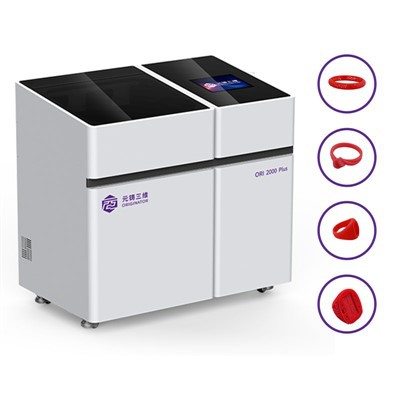
In conclusion, the precision of a Jewelry 3D Scanner is a crucial factor in capturing the true essence of a piece of jewelry. It depends on several factors, including the technology, resolution, sensor quality, and the scanning environment. At our company, we’re committed to providing scanners that offer the highest level of precision, so you can get the most accurate 3D models of your jewelry. If you’re interested in learning more, don’t hesitate to reach out. Let’s start a conversation and see how we can work together to make your jewelry dreams a reality.
Jewelry 3D Scanner References:
- Various industry publications on 3D scanning technology and jewelry manufacturing
- User manuals and specifications of different Jewelry 3D Scanners
Hangzhou Originator 3D Technology Co., Ltd.
Hangzhou Originator 3D Technology Co., Ltd. is one of the most experienced jewelry 3d scanner manufacturers and suppliers in China. With abundant experience, we warmly welcome you to wholesale high quality jewelry 3d scanner made in China here from our factory. Contact us for more details.
Address: Room 403, Building 2, Block B, Heda Incubation Park,No. 452, 6th Avenue, Xiasha, Qiantang District,Hangzhou, Zhejiang, China
E-mail: Sales@originator3d.com
WebSite: https://www.originator3d.com/
