Alright, let’s cut to the chase—if you’re a manufacturing, food processing, or lab tech team working in a cold climate, you’ve probably stared at your nitrogen generator and thought, “Wait… can this thing even handle below-freezing temps?” As a nitrogen generator supplier who’s spent 8 years troubleshooting units for customers in places like northern Canada, Norwegian fjord facilities, and even Antarctic research stations, I can tell you: it’s not a yes/no answer. It’s way more nuanced than that. Nitrogen Generator
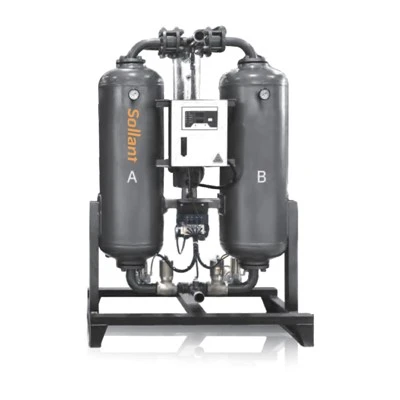
First, let’s break down what a nitrogen generator does, quick—no fancy jargon. Most of the units we sell use either pressure swing adsorption (PSA) or membrane technology. PSA pulls nitrogen out of ambient air by zapping oxygen and other gases with molecular sieves, while membrane systems use thin, gas-permeable filters to separate nitrogen. Both rely on airflow, right? And airflow in cold temps? That’s where problems creep in. But before we get into that, let’s clear a myth: some people think “low temperature” is just “below 32°F (0°C)” but for nitrogen generators, it’s really “below 40°F (4°C)” because that’s when moisture starts condensing inside your unit, not just sitting in a puddle.
I’ll start with what we’ve seen go wrong for customers who ignored the cold factor. Last winter, a craft brewery in Maine hit a wall. They were using a membrane nitrogen generator to blanket their beer tanks—keeps oxygen out, so the beer doesn’t go stale. But their outdoor storage unit (they skimped on climate control for the generator itself) dropped to 10°F (-12°C) for a week straight. The membrane module? It froze solid. The tiny pores in the membrane get blocked by frozen water vapor, so it stopped separating nitrogen. They ended up with 78% oxygen in their tank, not 99.9% pure nitrogen, and had to pull a batch of beer that tasted “off” because it oxidized. That was a $12,000 mistake, all because they didn’t consider the cold environment during setup.
Another one: a mining company in northern Saskatchewan. They used a PSA nitrogen generator to power their tire inflators for heavy machinery—low-pressure nitrogen prevents tire blowouts in cold, rocky terrains. Their generator was housed in a small, unheated shed. The molecular sieves inside the PSA unit? They’re porous, so they hold tiny amounts of ambient moisture. When it dropped to -20°F (-29°C), that moisture turned to ice in the sieve beds. The oxygen couldn’t be siphoned out, so the nitrogen purity dropped to 90%, and the unit ran 3x longer than normal just to hit that level—wasting electricity, and costing them $5k extra in power bills in a month.
But here’s the good news: it doesn’t have to be a total bust. We’ve fixed these issues, and we’ve even built custom low-temp units that work flawlessly in temps as low as -40°F (-40°C). Let’s get into the fixes we actually use, not the fluff you’ll see on a supplier’s generic spec sheet.
First, climate control isn’t a luxury—it’s a non-negotiable for standard units. If you’re running a unit that’s rated for “indoor use” (which is most off-the-shelf models), you can’t just stick it in an unheated shed in Minnesota. We recommend a small, space heater-powered enclosure for outdoor setups, or a heated cabinet unit that’s thermostatically controlled to keep the generator’s internal components at 50–70°F (10–21°C). Wait, that seems counterintuitive—why heat it when it’s cold outside? Because the active parts (the membrane, sieve beds, air compressor) need consistent temps to work. Compressors, for example, lubricate better at around 60°F; too cold, and the oil thickens, so the compressor has to work harder, leading to breakdowns.
Second, dehumidify before the air gets to the generator. Ambient air in cold places has lower humidity, but wait—when you pull in air from outside, even if it’s dry, when it warms up inside the generator, the moisture in that air turns to vapor. That vapor is the #1 cause of frozen components. So adding a point-of-use desiccant dryer right before the nitrogen generator cuts moisture by 99% before it even touches the unit. We had a customer in Alaska test this: they added a $800 desiccant dryer to their standard PSA unit, and it worked through -15°F (-26°C) all winter without a single breakdown. Before that, they had to service the unit every two weeks to clear ice.
Now, what if you need a generator to work without any climate control—like in a remote oil rig or a research base where power for heaters is limited? That’s where our custom low-temp models come in. Let’s talk about what we change from standard units:
- We use frost-resistant materials for internal piping: instead of regular steel that can crack when frozen, we use 316L stainless steel, which has a low thermal expansion rate and doesn’t bristle in cold temps.
- We install built-in trace heating cables wrapped around all critical components: not just the compressor, but the membrane module and sieve beds. These cables are low-voltage, so they don’t waste power, and they only activate when internal temps drop below 40°F.
- We adjust the molecular sieves in PSA units: standard sieves are made for 60°F air, but we coat low-temp sieves with a hydrophobic layer that repels moisture, so ice can’t form on the sieve surfaces. We tested these sieves at -40°F, and they still maintained 99.2% nitrogen purity—way above what most industrial applications need.
Let me be clear, though: there are limits. You can’t take a standard $1,500 membrane unit and stick it in -50°F (-46°C) without any modifications and expect it to work. We tried that once with a customer in Greenland (they had a emergency need for a small nitrogen supply for lab samples) and it failed within 12 hours. The membrane pores got completely blocked with frost, and we had to replace the module. But with a $300 heated enclosure and the desiccant dryer, that same unit works perfectly. There’s a reason we don’t oversell every unit for cold environments—we’ve seen the damage that happens when a supplier promises something they can’t deliver.
Another real-world example to back this up: a wind farm in northern Alberta. They needed nitrogen to pressurize their gearboxes (prevents oil contamination from moisture) and their turbine blades (prevents ice buildup). They were using a competitor’s unit that died every time temps dropped below 0°F, costing them $20k in downtime per cold snap. They switched to our low-temp PSA unit 3 years ago, and in the -30°F temps they get every winter, it runs 24/7 without issues. We did a check-in last month, and their purity is still at 99.5%—exactly what they need.
Now, if you’re reading this and you’re not in an extreme cold climate but you still have concerns about winter temps (say, a warehouse in Chicago that drops to 20°F overnight), the same rules apply. Don’t cut corners on climate control or pre-dehumidification. We’ve had customers in Michigan who tried to run standard units in unheated warehouses, and they ended up with frozen components just like the Maine brewery. It’s not that the unit can’t work—it’s that the setup was wrong.
Wait, let’s address a common question we get: can you use a nitrogen generator outside in cold temps without any enclosure? For small, portable units (like the ones used for tire inflators on construction sites), yes—if you follow the manufacturer’s temp rating. Most portable units are rated down to 32°F, but if you get the “cold-rated” portable models, they go down to -20°F. But for industrial or lab-grade units? No way. Those have more complex components that can’t handle unregulated cold.
What about maintenance in cold environments? That’s a big one most suppliers skip over. When temps drop, you should check the unit’s internal filters every 30 days, not every 90 like you would in a mild climate. Ice can clog air filters, which makes the compressor work harder, leading to higher energy bills. Also, change the desiccant in the dryer every 6 months instead of 12—cold temps make desiccant work faster, so it needs to be replaced more often. We send all our cold-environment customers a free maintenance checklist when they buy a unit, because even the best setup won’t work if you skip maintenance.
Let me wrap this up so it’s not just a list of examples—here’s the bottom line: a nitrogen generator can work in low-temperature environments, but only if you account for the cold during setup, and pick the right unit for the job. Standard off-the-shelf units work fine in temps above 40°F, but below that? You need either modifications (heated enclosures, desiccant dryers) or a custom low-temp model. Don’t fall for suppliers that say “all our units work in -40°F”—ask them what modifications they include, because it’s not just the unit itself, it’s the extras that make it work.

If you’re working in a cold environment and you’re not sure what setup is right for you—whether it’s a small portable unit for a construction site, an industrial PSA unit for a manufacturing plant, or a custom unit for a remote location—we can help. We’ve worked with tons of clients in cold climates, so we know the pitfalls and the fixes. Hit us up to chat through your needs, no pressure, no sales fluff—just real advice from someone who’s fixed these units way too many times.
Filter and Separator Series References
- ASHRAE Handbook: HVAC Applications, 2022
- Pressure Swing Adsorption (PSA) Nitrogen Generation Technology: Cold Weather Operating Considerations, Industrial Gas Equipment Association, 2021
- Membrane Gas Separation in Low-Temperature Environments: Performance and Degradation, Journal of Membrane Science and Technology, 2020
- Desiccant Dryer Sizing for Cold Climate Compressed Air Systems, Compressed Air and Gas Institute, 2019
Shanghai Sollant Energy Saving Technology Co., Ltd.
As one of the most professional nitrogen generator manufacturers and suppliers in China, we’re featured by quality products and good service. We warmly welcome you to buy bulk advanced nitrogen generator from our factory. If you have any enquiry about cooperation, please feel free to email us.
Address: No.215, Songri Center, Beihongqiao, Jiading District, Shanghai, China
E-mail: info4@sollant.com
WebSite: https://www.sollanttreatment.com/
